
Why Is Everything Normal Called Fascist?
The philosophical argument that got Žižek's attention

This is the written version of my most-watched YouTube video (144,000+ views, 8,300 likes). Slavoj Žižek responded to it on his Substack. If you’ve seen the video, this is a tighter version of the argument. If you haven’t, start here.
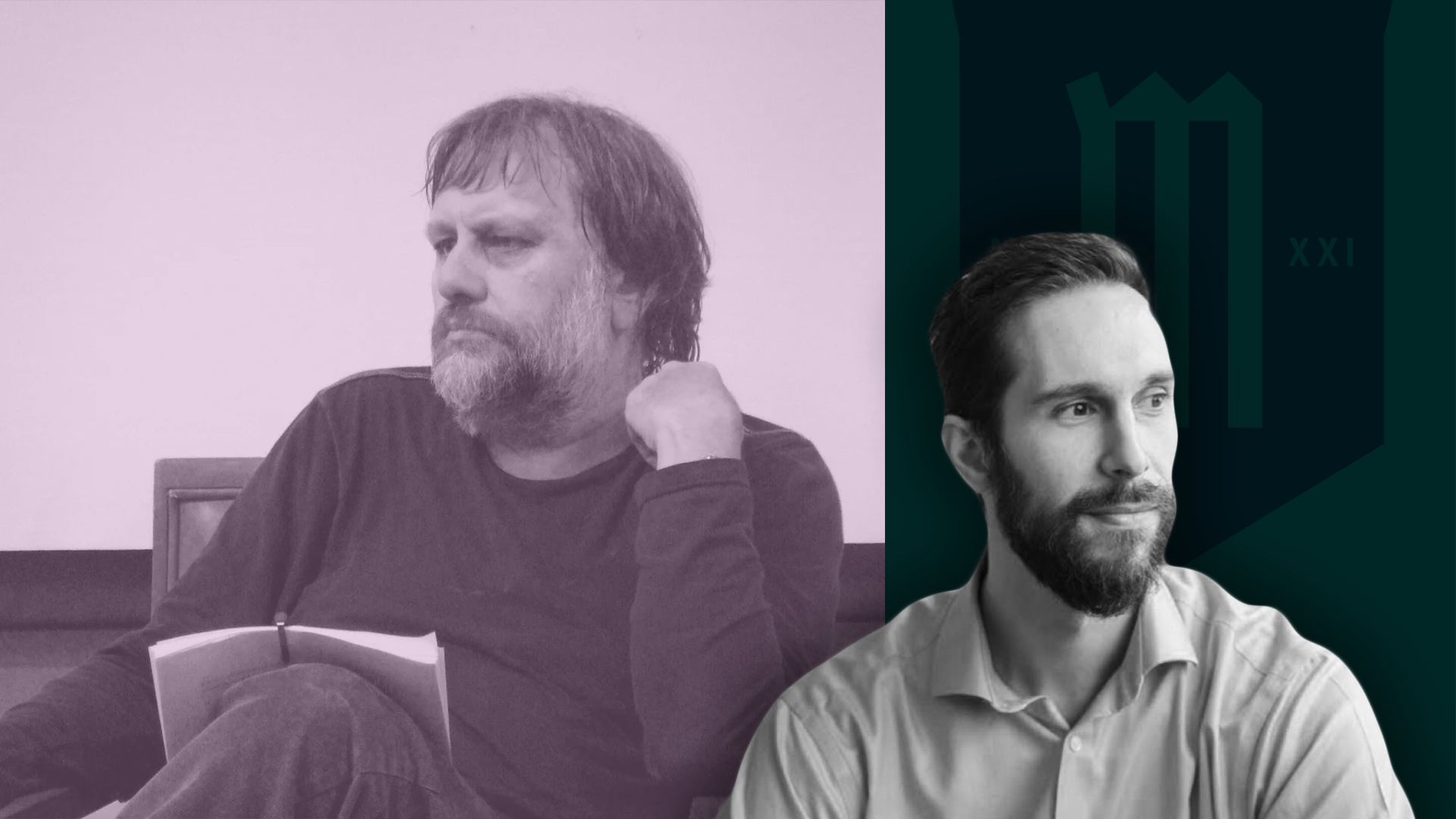
To make sense of the world today, you absolutely need to grasp one concept: right-wing anti-liberalism.
Here’s the basic picture, as Alexander Dugin argues: liberalism, communism, and fascism spent the 20th century duking it out for ideological supremacy. Liberalism won. And now, anybody who isn’t a liberal and isn’t to the *left* of liberalism gets called a Nazi.
You know this. You don’t need me to tell you. Look at the last 10-20 years and ask yourself: who’s been called a fascist? People who defend the nuclear family. People who defend normality. People who defend beauty actually being beautiful and not ugly. People who think things can be good and not degenerate. These people — ordinary people — get branded as far-right extremists.
We’re excluding those who actually carry out violence. We’re talking about ordinary people being demonized. It’s a very effective rhetorical strategy, although its effectiveness is declining.
How We Got Here
If you are to the right of liberalism in any way — if you contest some of its principles, but *not* in the name of greater equality, not in the name of social justice, not in the name of inclusivity, diversity, and equity, but in the name of something else — then you are branded an enemy of the state, an enemy of the people, an enemy of mankind.
The consequence: everything coded as “right-wing anti-liberalism” was completely taken off the table.
And here’s the most serious problem. **What does that include?**
It includes many sound principles of statesmanship and statecraft. It just does. Because it takes Plato off the table. Plato is not a liberal and he’s not to the left of liberalism, therefore he is right-wing anti-liberal. It might sound weird to say, but it’s actually not that weird if you look at the history of the polemics against political Platonism.
Take his two most prominent defenders in my mental world: Leo Strauss, who wrote Studies in Platonic Political Philosophy, and Alexander Dugin, who wrote Political Platonism. Strauss was called a fascist. Dugin is called a fascist. They’re different thinkers. Doesn’t matter.
Reference to Plato means reference to an ideal of excellence, of virtue, of criticism of democracy, of criticism of freedom as the ultimate ideal, of criticism of equality as the ultimate ideal. It’s a world where the gods are back as the grantors of the legitimacy of law. It’s a world where the philosopher is the highest type among men — not the crazy perverted postmodern philosopher, but the philosopher like Socrates, who actually pursues the good life and is the most just of men.
What Got Thrown Out
There’s a war on Platonism. A war on Aristotelianism. A war on anything that’s not liberal or leftist. And this war doesn’t just ban fringe politics. It throws out:
- Classical political rationalism, the actual tradition of thinking seriously about statesmanship
- Classical republicanism, the legislative art that built civilizations
- The greatest moments of Western philosophy, primarily Heidegger’s monomaniacal pursuit of the meaning and truth of being, absolutely decisive for every real thinker of the 20th century, whether they agreed with him or not
Heidegger is somehow off the table. Nietzsche is off the table. Carl Schmitt is off the table. Plato proper is off the table. They’re all considered no-go zones from the point of view of liberal zealotry.
Somehow it’s fine if you’re interested in leftist thought. But if you’re interested in rightist thought, it’s dangerous. The situation has improved since Trump won the election, but you still have to understand what’s been going on.
The Classical Model
What’s actually at stake in this suppressed tradition?
Consider Plato’s Cave. Some people see shadows. Some see the fire burning in the cave. Some manipulate images to control others. But some people have so elevated their existence, so deepened their way of being in the world, that they have made the breakthrough, the conversion of the soul toward the things that truly are. They become wisdom seekers, if not wise men.
This is a model of differentiation at the level of intellectual intensity. Not a universalizable method where everybody has equal access to what can be known. No, there are those who are privileged in their ability to know. And this privilege isn’t white privilege or any of that. The privileged insights of the wise become the standard. Man is not the measure of all things. The wise man is the measure of all things that matter for human life.
Now imagine that because you’re so worried about hierarchy, so worried about exclusion, so worried about dividing the world into friends and enemies — because that’s “fascism,” that’s “us versus them,” that’s Carl Schmitt, and that’s eventually Hitler — you close the door on sound common sense. You close the door on classical political rationalism. You close the door on Heidegger’s foundational questioning.
You deliberately blind and lobotomize yourself. And then you wonder: how did the world get like this? How did schools become degenerate? Why are children taught transgender ideology in grades one, two, and three? How did waving your country’s flag become akin to terrorism while waving a terrorist flag became an act of resistance?
How did we get an inverted world?
The Horse That Threw You
You can chase nature out the door with a pitchfork; nevertheless, it returns.
I know someone learning to ride horses who fell and got spooked. Now he doesn’t want to get back on a horse. Does that mean every horse will throw him? No. Is there a world where he can ride well? Yes. But this catastrophic event keeps him from seeing what the horse has to offer.
It is an unfortunate fact of our political history that the extreme, exaggerated depravities of right-wing anti-liberalism, mixed with other insanities, culminated in things that spooked humanity so badly that much of the civilized world said: “don’t even talk to me about horses. Don’t look at horses. Horses are terrible.”
Horses went from being noble creatures, man’s original best friend [my dog-loving friend don’t love this formulation, but that’s okay], to something you keep far away.
The Corrective
My suggestion: discover the virtues of right-wing anti-liberalism in a world that has told you constantly about the vices.
Do it at the high plane of serious study. Read the thoughtful political philosophers, past and present. Fight the temptation to reduce everything to its most vulgar, nauseating, and violent form.
This is how you figure out what’s going on. This is the corrective. And this is how you understand why almost everything that was once called basically normal — sound common sense — is today called far-right, neo-Nazi, fascist resurgence.
That’s not viable, and it won’t last.
You can chase nature out the door with a pitchfork. Nevertheless, it returns.
If you want a guided introduction to the thinkers and traditions discussed here — Plato, Strauss, Heidegger, Schmitt, Dugin — my free Political Philosophy Primer is a good place to start, as is my youtube channel.
Watch the original video here: